

Dream Big
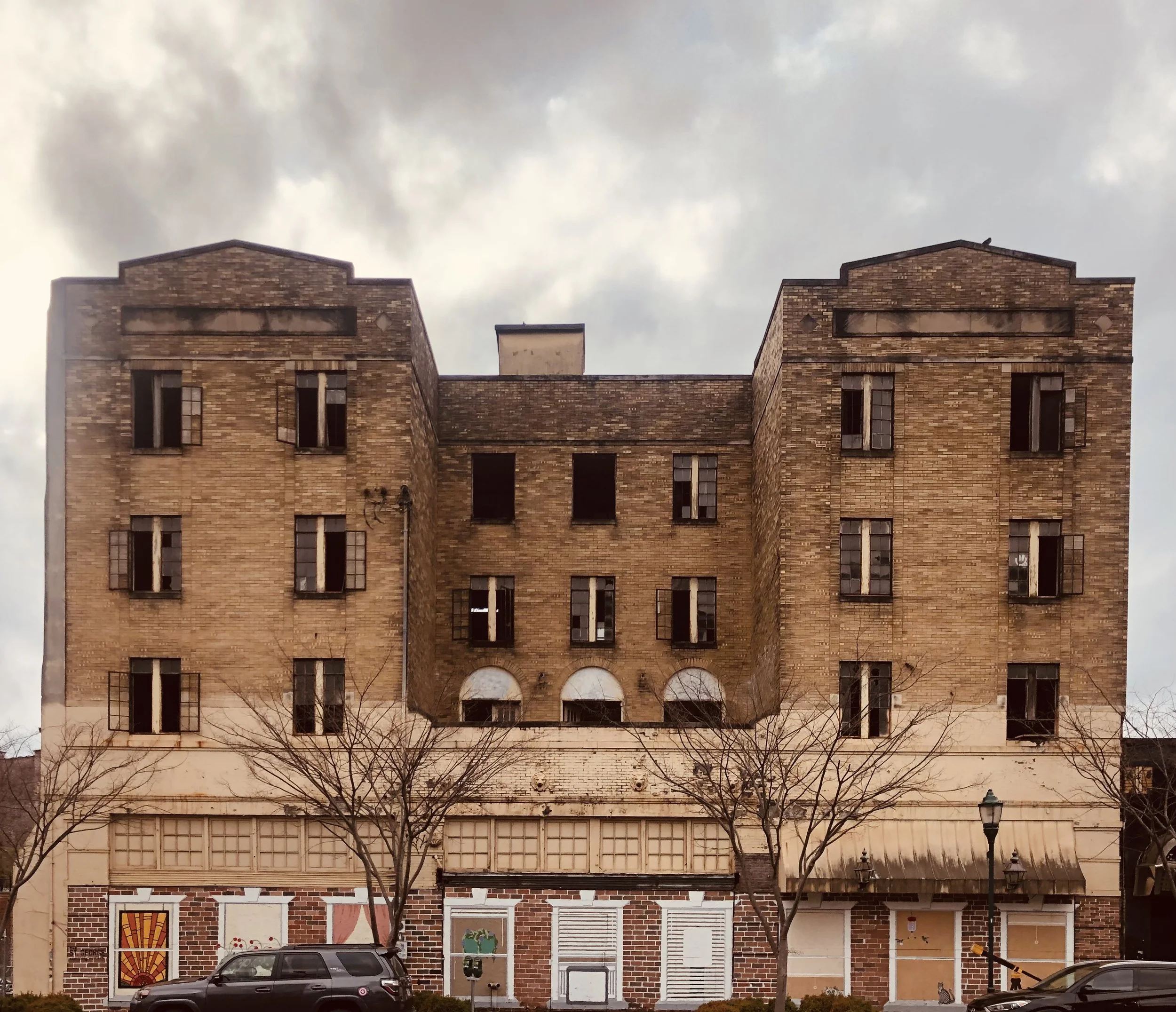
The historic St. George Hotel was a contributing structure in the Market and Main National Register District. It was demolished in 2022, suffering from years of neglect.
What is a Preservation Revolving Fund?
A revolving fund is one of the most powerful tools available to protect endangered historic places. Rather than simply advocating for preservation, a revolving fund allows an organization like Preserve Chattanooga to take direct action by acquiring threatened historic properties, stabilizing and rehabilitating them, and returning them to the private sector with protective measures such as preservation easements or deed restrictions. Proceeds from each project are then reinvested into the next, creating a sustainable cycle that preserves Chattanooga's architectural heritage while encouraging private investment.
As Cornerstones, this organization successfully used this model to rescue some of the city's most significant historic buildings, demonstrating that preservation is not only good for our community's heritage but also a catalyst for economic development. At one time, the Cornerstones revolving fund had leveraged more than $5.5 million in private rehabilitation investment, generating approximately five dollars of private investment for every dollar invested by the organization. The restoration of landmarks such as the St. John's Building, Central Block, and the Southern Railway Passenger Baggage Building stand as lasting examples of the program's impact.
Today, Chattanooga continues to experience tremendous growth. New investment and redevelopment bring exciting opportunities, but they also place increasing pressure on the city's historic buildings and neighborhoods. As demand for redevelopment accelerates, Preserve Chattanooga is working to expand its preservation toolbox to meet these new challenges.
Thanks to the generous support of The 1772 Foundation, Preserve Chattanooga has engaged Hanbury Preservation Consulting to complete a comprehensive Revolving Fund Feasibility Study for Chattanooga. The study evaluated opportunities to strengthen and expand the program, identify potential funding strategies, and develop recommendations that would enable Preserve Chattanooga to protect more of the historic places that define our city's unique character for generations to come.
“This study demonstrates that a revolving fund for Preserve Chattanooga meets the four-part test (mission, need, what can be accomplished, and costs). The following document provides context with an overview of Chattanooga and Preserve Chattanooga; reviews the study methodology; addresses feasibility through the four requirements as listed above; shares stakeholder feedback; offers conclusions and recommendations; describes three major program typologies; and lists examples of best practices with a case study example.”
- Mary Ruffin Hanbury, Founding Principal of Hanbury Preservation Consulting
What could a Preservation Revolving Fund do for Chattanooga now?
-
A revolving fund allows fast action when a significant property is suddenly at risk (estate sale, speculative listing, neglect, or demolition pressure). Instead of relying on slow grant cycles or waiting for a developer, an entity like Preserve Chattanooga could step in temporarily to control the outcome.
-
Many historic buildings aren’t immediately financeable by banks or developers because they need stabilization. A revolving fund can pay for:
roof repairs
structural stabilization
code compliance basics
selective demolition or mothballing
This makes properties “finance-ready” for private reuse.
-
Tennessee projects using the federal historic tax credit program often fail in early stages because upfront risk is too high. Tennessee does not offer a state rehabiitation tax credit. A revolving fund reduces that risk, making it easier for developers to close financing gaps and move forward with adaptive reuse.
-
When a trusted local preservation organization is actively stabilizing or holding key properties, it signals market stability. Developers are more likely to invest in districts where there is visible stewardship and risk mitigation.
-
Chattanooga has seen cycles where historic structures are left to deteriorate until demolition is the only “economically viable” option. A revolving fund interrupts that cycle by intervening earlier.
-
Unlike one-time grants, the fund replenishes itself through:
resale of properties
easement sales
lease income
partnership returns
Over time, even a modest seed fund can have outsized impact.
-
Instead of scattered interventions, the fund can be targeted to priority corridors—like downtown edges, historic neighborhoods, or underused commercial strips—creating visible momentum in specific areas.
-
For an organization like Preserve Chattanooga, it would add a powerful “action arm” alongside advocacy, education, and easements—especially for moments when policy alone isn’t enough to save a building.